





The Most Expensive Mistake When Buying Property in Spain: Not Having an Agent

Many clients start the conversation in a very similar way:
“We will first look around on our own, and if we choose something, then we might contact an agency.”
Behind this usually stands one thought — if we contact the developer or the property owner directly, we will avoid the agent’s commission and it will be cheaper.
This sounds logical… but not in the Spanish market.
The property sales system in Spain works very differently from Poland and most European countries. A real estate agent here is not simply someone who “opens the door to an apartment”. In practice, they are somewhere between an advisor, coordinator, translator, and manager of the entire process — and that process often takes months and begins long before the visit to the notary.
Property price and the most common misunderstanding
The biggest surprise for buyers is that purchasing without an agency does not reduce the price.
Developers and sellers include the sales costs in the property price from the beginning. This means that the price of an apartment or villa is the same whether the client comes alone or with a real estate agency. Developers do not have a mechanism to sell cheaper just because the buyer came without an intermediary. The official price list applies to everyone.
As a result, a buyer who acts independently pays exactly the same, but takes on the entire burden of the process, documentation, and communication — often in a foreign language and within an unfamiliar legal system.
That is why in Spain an agent is not a cost.
It is a service included in the same price.
What happens after choosing a property – the role of the agent and the lawyer
Many buyers assume that the role of the real estate agent ends once the right property has been found. In reality, this is only the beginning of the entire process.
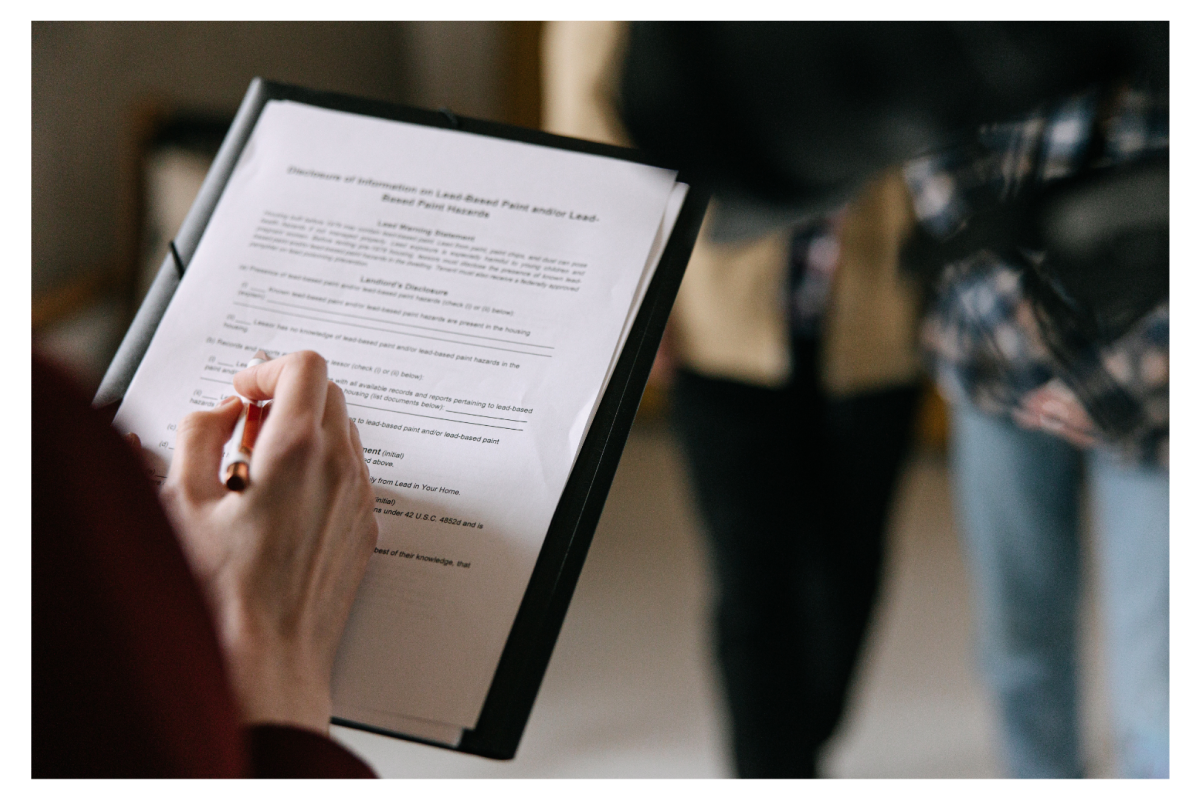
At the formal stage, the key role is played by the law firm. Lawyers are responsible for verifying the property documentation, preparing the contracts, checking the legal status of the property, and ensuring that all aspects of the purchase are properly handled. At Costa Ibérica we cooperate with a law firm that provides full service in Polish, which gives our clients confidence that all documents and procedures are fully understandable for them.
The agent does not replace the lawyer – their role is to coordinate the entire process. The agent remains in constant contact with the developer or the property owner, the law firm, the bank, and the notary, ensuring that all stages proceed smoothly and in the correct order.

However, the role of the real estate agency becomes particularly visible after the purchase has been completed. This is the stage when the new owner needs to organize many practical matters related to the property.
The agency helps coordinate these activities — after the reservation is made, it often accompanies the client when selecting finishing materials for the property or movable furniture and other equipment. This process usually takes place with the support of a trusted interior designer, who helps match materials, colours and functional solutions to the style of the apartment and the owner’s expectations.
The agency’s role also includes coordinating contact with contractors and translating conversations and documents related to the finishing and furnishing of the property. This often also involves assistance with arranging services such as internet, air conditioning or other elements necessary for comfortable use of the apartment.
For many foreign clients, this is a significant convenience, as they are not familiar with local companies, the language, or the procedures. With the support of the agent and the agency, they can calmly go through the entire process and focus on what matters most — enjoying their new home in Spain.
In our Costa Ibérica Real Estate office, we also often help clients understand the details of the development projects — we translate technical developer specifications (memoria de calidades) and documents that are often difficult for buyers to understand in Spanish.
Therefore, in practice, a real estate agent is not only a person who helps find the right property, but above all a coordinator of the entire purchasing process and a client advisor even after the transaction has been completed. Buyers often only realize this later — that they did not simply buy a “service of finding a property”, but ongoing support in a foreign country.

Access to a market that is not visible on the internet
A person who searches for property in Spain independently usually sees only a small part of the market — a few developments found on listing portals or in developer advertisements. In practice, the offers available on the internet represent only a fraction of what is actually available.
A real estate agent operates within a network of cooperating agencies, developers, and professionals involved in property transactions. Thanks to this, the agent has access to a much wider database of properties — often also to offers that appear on the market before their official publication.
However, the number of offers is not the most important aspect. Equally important is the market knowledge that cannot be seen in advertisements. Experienced agents know the history of many residential developments, understand what technical problems have appeared in certain buildings, and know which developers have a good reputation among clients. Thanks to this, they can not only show a property but also help evaluate whether it is truly a good decision. Sometimes the greatest value of an agent’s work is not presenting a property, but honestly recommending that the client should not buy it. The client does not see this — because they simply avoid buying a problem.

It is also worth knowing that in Spain there is no need to contact many real estate agencies in order to see different properties. Unlike in many other countries, most agencies cooperate with each other through shared property databases and networks. This means that one agency can present properties that belong to other agencies or different developers.
Thanks to this, the client does not need to contact several agents at the same time or repeat their expectations in multiple places. Cooperation with one trusted real estate agency is enough to gain access to a wide range of properties available on the market while also having the entire purchasing process coordinated.
In our office we approach this in a fully transparent way. We show our clients various developments and properties available on the market — including those offered by other developers or cooperating agencies. We do not omit projects simply because they are not directly in our portfolio. Our role is to present real options, explain the differences between developments, and help the client evaluate which one best matches their expectations.
The final decision always belongs to the buyer. The role of the real estate agency is to advise, organize the information, and guide the client through the entire process in a calm and safe way.
Because in a market where hundreds of properties are available, the most important thing is not to see everything. The most important thing is to choose well.
Why the real estate agency itself also matters
It is also worth paying attention to the difference between an individual agent working independently and a professional real estate agency. In the market you can find agents who work on their own, often without a permanent office or organisational support. In practice, however, one person cannot effectively supervise all stages of the process.
In a real estate agency such as Costa Ibérica Real Estate, responsibilities are divided among a team of specialists. Different people are responsible for different stages — the agent working directly with the client, the sales coordinator, the sales manager, and the administration team. This ensures that the entire process is better organised and that the client has the support of several competent professionals rather than just one person.
Document security
Classic real estate fraud is rare in Spain. Much more common are formal issues, such as:
• unregistered extensions
• terraces not included in the registry
• garages without legal status
• unpaid community fees
• differences between the registered and actual property size
These problems usually do not appear during a viewing. They may only become visible later — sometimes years later.
That is why one of the most important tasks of a real estate agent is to ensure that a lawyer verifies the property before any money is transferred.
Why many buyers change their mind
It often happens that a client starts the process intending to buy independently. After going through the entire procedure, they often say the same thing:
“If we were doing this again, we would start with an agent.”
Not because it is difficult to find a property.
But because it is difficult to buy it safely and later live normally.
Buying property in Spain is not just a transaction. It means entering the legal, administrative, and practical system of another country. A real estate agent guides the client through this system step by step and remains available even long after the keys are handed over.
That is why, in practice, the most expensive option may be buying… without an agent.
Contact Costa Ibérica
- C. Ramón Gallud, 78, bajo B, 03181 Torrevieja, Alicante
- +34 644708520
- +34 865648065
- office@costaiberica.com
Image gallery

Share


